When is compost ready to use?
How to recognise mature compost: stable temperature, an earthy smell, crumbly texture and a microscopic assessment of its biology.
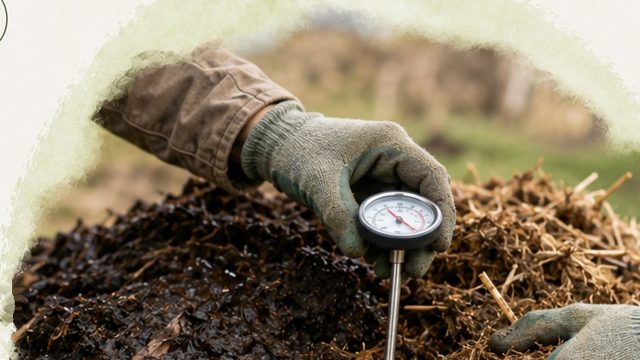
Compost is ready when it has completed active composting and maturation. It has an earthy smell, a loose, crumbly texture and a stable temperature. Assessing these features together helps us recognise mature material. Under the microscope, we also examine its biological quality: the life it will bring to the soil.
During active composting, we monitor temperature, oxygen supply and moisture. Turning helps maintain suitable conditions throughout the pile. Once intensive decomposition comes to an end, the compost begins to mature. This quieter stage is necessary for the material to become suitable for use around plants.
A stable temperature is an important clue
As compost matures, its temperature gradually approaches that of its surroundings. Well-stabilised material does not return to intense heating after mixing, even though it has the moisture and air that organisms need to work.
That last condition matters. A dried-out pile can also be cool because a lack of water limits biological activity. In that case, a low temperature means that the process has stalled, rather than finished. A thermometer reading alone therefore cannot establish readiness.
Smell and texture reveal changes in the material
Mature compost smells of earth or forest litter. Its finer material is crumbly and separates easily. A putrid, sour or sharp ammonia smell calls for further assessment before use.
Pieces of wood or tougher stems may remain because they decompose more slowly. Their presence does not make the whole batch immature. What matters is the condition of the rest of the material, together with its smell and temperature behaviour.
Our four-part series on composting manure (in Polish) shows how quickly the offensive smell disappears. This clear improvement occurs before maturation is complete. A pleasant smell is therefore one sign of change, but does not by itself mean that compost is ready.
Mature compost and its biological quality
When compost is intended to restore soil life, we also want to know which organisms it contains. Two mature batches that look alike can differ in their quantities of bacteria, fungi, protozoa and nematodes.
Biological compost testing reveals these differences. We assess a sample of the material you have, including compost you bought or received from someone else. Knowing its original ingredients or production history is not a requirement for this assessment.
Assessing maturity tells us whether the material has completed the necessary transformation. Biological assessment helps establish which organisms we can introduce into the soil with it.
From ready compost to living soil
Good compost is a valuable resource for regeneration, so recognising when it is ready is a useful skill. Our Living Soil Shortcut course explains how to manage a pile, assess its condition and choose how to use compost in your garden or on your farm.