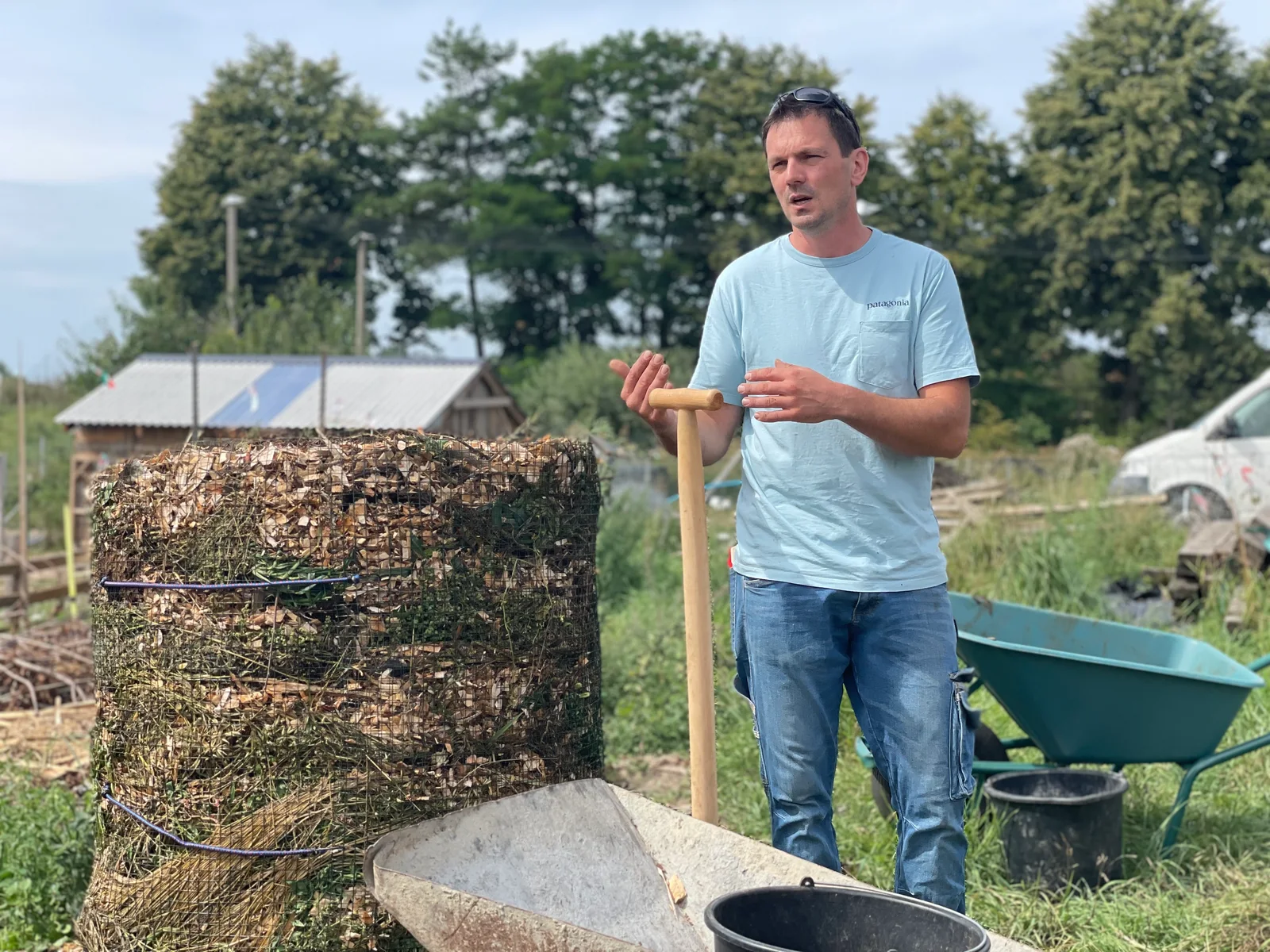
Finished compost: how to use it in gardens and on farms
Where and when to apply finished compost: beds, orchards and larger crops. How mulch, compost extract and spreading equipment support soil regeneration.
Biologically rich compost brings organisms and organic matter into soil. We use it on beds, in crop strips or in selected areas needing recovery. Placement depends on material quality, the purpose of the work and conditions for the life it carries.
Making compost takes time and effort. If starting with manure, read about composting it. Application should make that effort count: bring good material where it is needed and provide conditions for organisms to develop further.
Compost brings life; soil must sustain it
Well-prepared compost introduces organisms involved in breaking down plant residues and cycling nutrients. Its living community and production conditions matter. Dark colour alone does not establish biological quality.
Organic matter provides food and part of the organisms’ habitat. Surface cover retains moisture, while growing plants support life around roots. Applying compost is therefore one part of regeneration.
Match placement to the growing area
On a bed, compost can easily cover the whole growing surface. Covering it with plant-based mulch, such as leaves or straw, helps limit drying and sudden temperature changes.
In orchards or around shrubs, targeted placement directs material to selected root zones. On larger areas, we also use crop strips or begin with weaker patches needing recovery.
A larger area does not mean covering all of it immediately with a thick compost layer. Start with quality and where the material is most needed. Targeted placement lets work begin with the resources already available.
Timing follows conditions on site
Moist soil and moderate temperatures favour introducing compost organisms. In our practice, spring and autumn are often suitable. Before starting, we assess soil conditions, not just the calendar.
A dry, exposed surface offers different conditions from moist, covered soil. Preparing the site matters as much as delivering the compost.
A spreader helps at larger scales
A wheelbarrow and hand tools are enough for a few beds. For long crop strips, fields or pastures, transport and even distribution become a bigger part of the task.
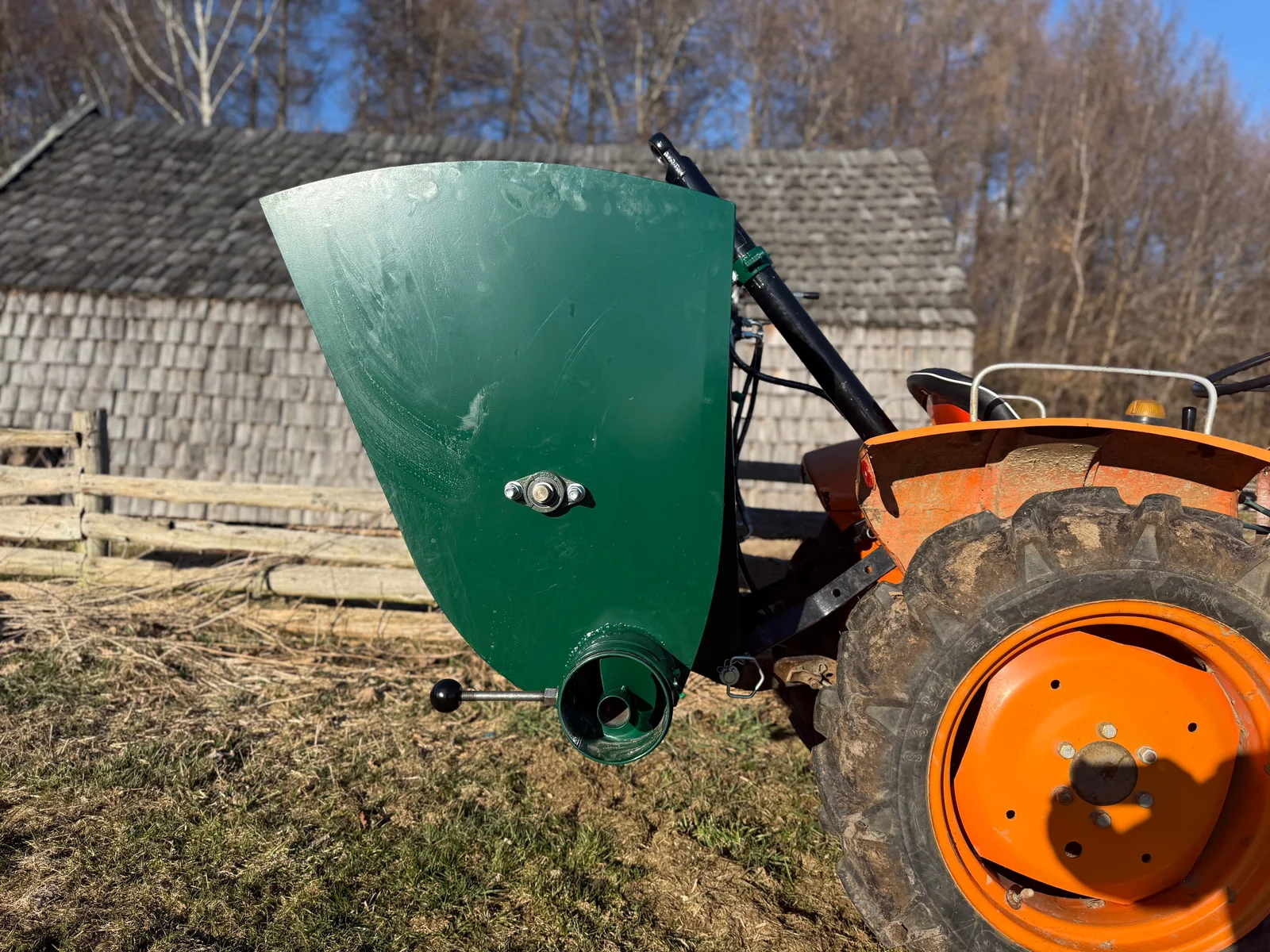
Applying a thin, even layer over a large area requires control of material delivery. We designed our compost spreader for that work.
If you already have compost and need to improve application, see our compost spreader on the Polish product page. Selection takes account of material, tractor, site and scale.
Extract distributes biology in another form
Compost extract transfers organisms from compost into water for soil application. It adds much less organic matter than solid compost. The need to introduce organisms must therefore be distinguished from the need to supply a larger quantity of organic material.
Our Polish course Żywa Gleba Krok po Kroku explains how to choose form, quantity and application for your soil. It connects compost production with a planned recovery of a garden or farm. For English learning, explore Living Soil Shortcut.
Before loading the material, check how to assess compost readiness.