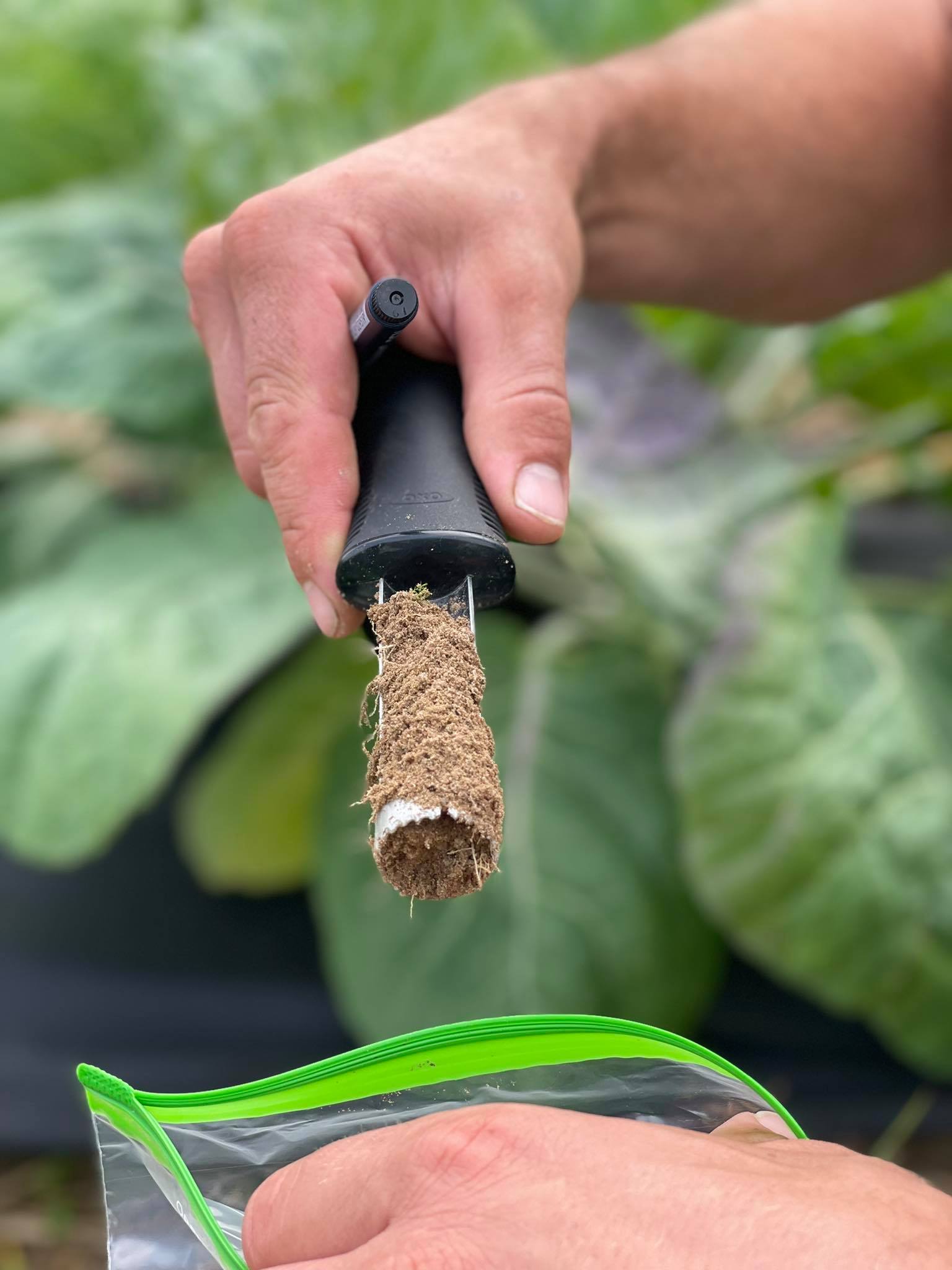
Soil or compost problem? Find the cause before you add another product
Field observation, chemistry, biological assessment and compost process signals provide different information. Start with the question you need answered.

Start by deciding what problem you want to solve. Field observation, chemical testing, microscopy and compost process signals answer different questions. None of them gives the whole picture on its own.
The expensive mistake is to jump straight to a solution — fertilizer, microbial product, compost or another technology — before you know what is actually limiting the system.
Question first, tool second
Soil functions through physical, chemical and biological processes. Each one has to be observed differently.
That is why “what should I apply?” is usually a question asked too early.
First ask:
- why water is standing after rain,
- why crops are weak despite fertilization,
- whether the problem is chemical,
- whether the soil has a biological network capable of cycling nutrients,
- whether the compost you plan to use actually contains what the system needs.
Only then choose the tool.
Three types of information about soil
Field and function. What you can see on site: infiltration, surface behaviour, root condition and crop condition. Observation tells you where to look, but it does not replace testing.
Chemistry. Chemical testing answers questions about pH and selected chemical parameters.
Biology. Microscopy shows what chemistry cannot: which biological groups are present and how the biological part of the system is structured.
These three sources do not compete. They show different parts of the same soil.
Do not assume the starting point is good
A field does not have to look catastrophic to be biologically depleted.
At BioFarmLab the same pattern has repeated in every agricultural soil sample submitted so far: a strongly simplified biological system. We have not yet received a farmed-soil sample that we would describe as a well-structured, balanced biological ecosystem. Most often bacteria dominate and the complete soil food web is not present.
We have seen good compost and good samples from carefully managed gardens.
That is why beginning regeneration with “my soil is probably fine” is a weak starting point. It is better to see what is actually there first.
A biological test before management changes creates a baseline. Only then can you later judge whether the system has actually moved in the desired direction.
Why a biological result can change the decision
Imagine two soils with similar pH and similar selected nutrient levels.
Chemically they may look similar. Biologically they may be completely different.
One may contain a richer network of bacteria, fungi, protists and nematodes. The other may be a much more simplified system.
Those are different starting points.
If you do not know the difference, you can apply the same product in both places and expect the same response. That is guessing.
A test is not the goal. It is the starting point
Receiving a report does not change the soil.
The result matters when it answers a real question and leads to a next decision.
After a biological test, ask:
- what biological system is present now,
- how that compares with the management goal,
- what field observations and chemistry tell you,
- what process is most likely limiting the system,
- how you will later check whether the change worked.
Those are not five products to buy. They are five questions that keep you from working blind.
Why baseline testing matters before intervention
If you first change fertilization, add compost, apply a microbial product and change cultivation, and only then test the soil, you no longer know where you started.
A test before the change gives you the baseline.
A later test, sampled in a comparable way, can show whether the biological part of the system actually changed.
That means you are not judging a method by impression. You have before and after.
Compost is a separate process
Compost is not soil. It is a biological process that changes over time.
Temperature, moisture, structure and smell all provide information, but they are signals, not a complete diagnosis.
If compost is intended to change soil biology, it is useful to know not only whether it “looks good”, but what it actually contains and what job it is supposed to do.
Why one symptom is not a diagnosis
One symptom is one clue, not an explanation.
If you change several things at once, you lose the ability to tell what helped and what did not.
Diagnosis should lead to a decision
Good diagnosis is not collecting as many measurements as possible.
It means:
- asking a specific question,
- choosing the test that actually answers it,
- combining the result with what you see in the field,
- making one sensible decision,
- checking the effect later.
Only then does testing become a management tool rather than another expense.
If you want to learn how to combine field observation, chemistry, biology and compost into one structured process, see Living Soil Shortcut.