
Chemical vs. biological soil testing: what does each one tell you?
Chemical testing measures pH and selected nutrients. Microscopy-based biological assessment shows the presence and proportions of major organism groups. The two methods answer different questions.
The most useful question is not “which test is better?”. It is: what do you want to know about your soil, and what will you do with that information next?
A chemical test describes pH and selected nutrient levels according to a defined method. Microscopy shows which biological groups are present in the submitted sample and in what amounts. These are two different views of the same soil.
That is why chemistry alone does not tell you how the whole system is functioning.
What chemical testing tells you
Chemical soil testing is used to assess selected chemical parameters. Penn State Extension describes soil testing as a tool for evaluating soil fertility, including pH and selected nutrient levels.
Those numbers depend on the laboratory, extraction method and test package. They are not simply “the total amount of everything in the soil”.
Chemical testing is therefore very good at answering chemical questions. It does not show which organisms make up the biological part of the system.
What biological testing tells you
At BioFarmLab we use microscopy to assess:
- bacteria,
- fungi,
- the bacterial-to-fungal ratio,
- protists,
- nematodes.
This is not a second version of a chemical test. It answers a different question: who is living in this sample, and what does the biological network look like?
Soil organisms take part in decomposition, nutrient cycling and soil structure. Two soils with similar pH and similar chemical results can therefore be biologically very different.
Microscopy gives you a biological baseline. It does not automatically mean “apply product X”. The result has to be interpreted in relation to the crop, the management goal and what is happening in the field.
“My soil is probably fine” is not a diagnosis
It is easy to assume that if crops are growing, the soil must also be biologically healthy.
That is not what we see in the BioFarmLab laboratory. Every agricultural soil sample submitted to us so far has shown a strongly simplified biological system. We have not yet received a farmed-soil sample that we would describe as a well-structured, balanced biological ecosystem. Most often bacteria dominate, while the fungal part of the network and higher trophic levels are poorly developed or missing.
We have, however, received good compost samples and good material from carefully managed gardens.
So if a soil has been farmed for years, it makes little sense to begin a regenerative transition by assuming that the biology is already fine. A biological test at the beginning gives you a baseline: you know where you are starting from before trying to judge whether later changes worked.
Why it matters to know what is actually living in the soil
Without a baseline it is very easy to work blind.
You can buy compost, apply a microbial product or change management, but without knowing the starting point you do not know:
- whether biology was actually the limiting factor,
- which biological groups were poorly represented,
- whether the intervention improved the system,
- whether the biological picture is different months later.
A test is most useful when it is part of a decision, not an end in itself.
What to do with a biological result
The first step is not buying another product. First, understand the pattern in the sample.
1. Define the goal
The same result may mean something different in a vegetable garden, orchard, pasture or field being prepared for another crop. The result always has to be read in context.
2. Look at the whole system, not one number
A bacterial-to-fungal ratio by itself is not the soil food web. Neither is the presence of a single nematode group. What matters is the whole picture: bacteria, fungi, their balance and the presence of the next trophic levels.
3. Combine the laboratory result with field observations
A biological test is one source of information. Soil structure, moisture, management history, crop condition and other field observations are another.
4. Add chemistry when the question is chemical
If you need to know pH or selected nutrient levels, use a chemical test. Microscopy does not replace that.
5. Test again after management changes
If you change how the soil is managed, the first biological test becomes a reference point. A later sample taken in comparable conditions can show whether the biological system has actually moved.
That is the difference between diagnosis and guessing: baseline, intervention, verification.
Which test answers which question
| Question | Method |
|---|---|
| What is the soil pH? | Chemical testing |
| What are the levels of selected nutrients according to the chosen method? | Chemical testing |
| Are bacteria and fungi present, and in what amounts? | Microscopy-based biological assessment |
| What is the bacterial-to-fungal ratio? | Microscopy-based biological assessment |
| Are protists and nematodes present? | Microscopy-based biological assessment |
| What is the biological baseline before management changes? | Microscopy-based biological assessment |
| Did the biological system change after management changes? | Comparison of biological tests taken in comparable conditions |
| What yield will this field produce? | Neither test alone |
When both tests are useful
Use both when you want a broader picture.
Chemistry describes selected chemical parameters. Microscopy shows the biological part of the system. Field observation shows how that system behaves in practice.
Only then can you ask the useful management question: what is actually limiting the system, and what should change first?
Why sampling matters
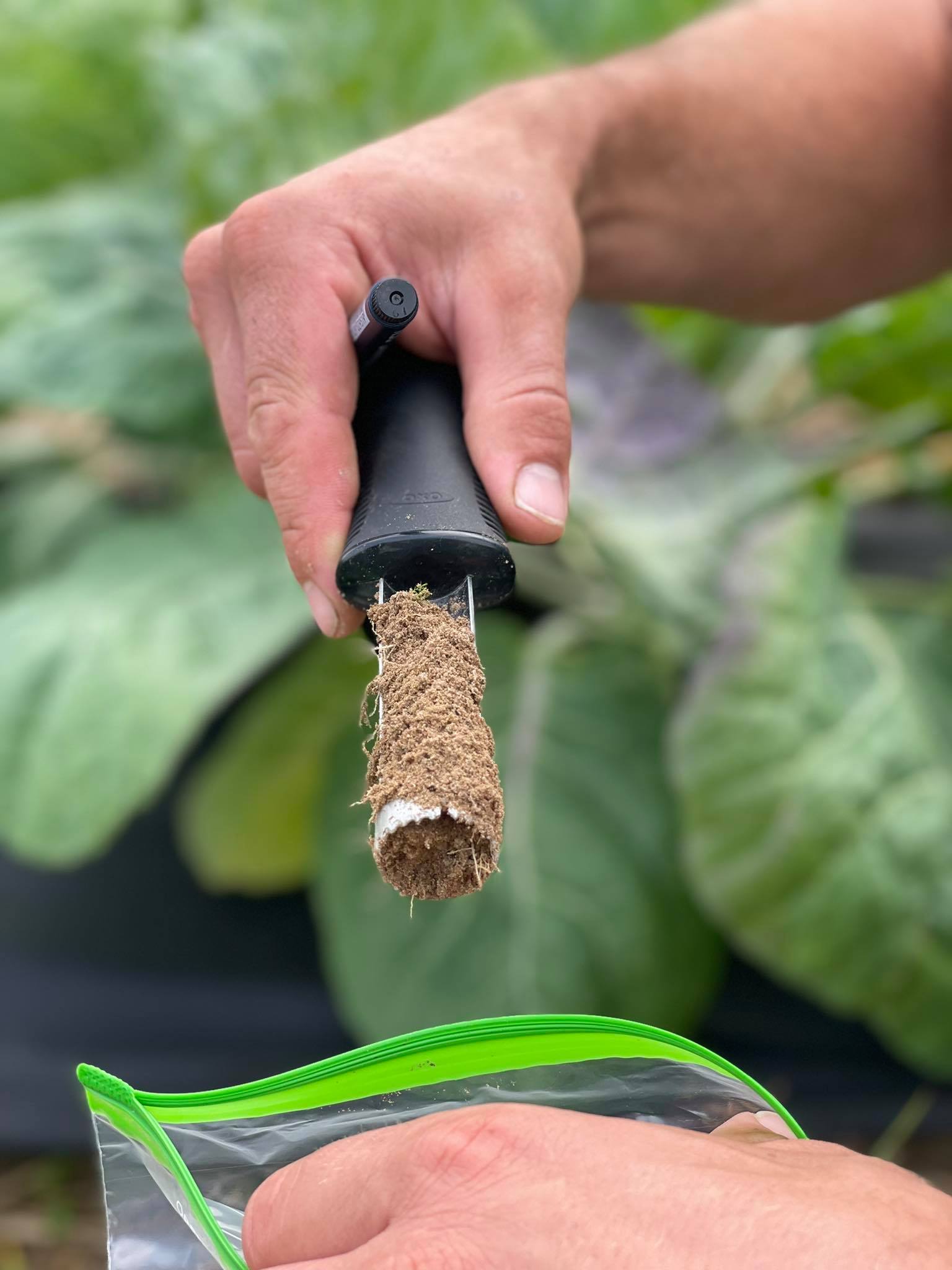
Penn State Extension stresses that representative sampling is critical to interpretation. A laboratory can only analyse the sample it receives.
For biological testing, time and place matter as well. If you want to compare results later, collect samples as consistently as possible.
Sources
- Penn State Extension, Interpreting Your Soil Test Reports
- Penn State Extension, Soil Testing
- USDA NRCS, Soil Biology Primer
- BioFarmLab, Laboratorium
- BioFarmLab, Procedura pobierania próbek


