Restoring soil biology: what are we rebuilding?
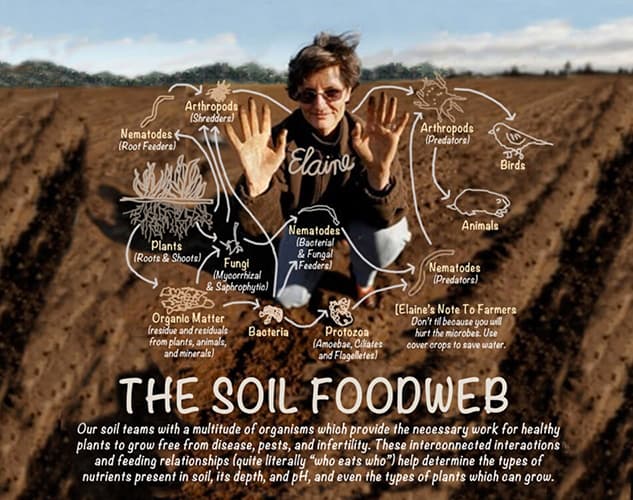
Restoring soil biology means rebuilding nutrient cycling, organic matter breakdown, soil structure and relationships between roots and soil organisms.
Restoring soil biology does not simply mean “adding bacteria”. It means rebuilding biological processes and the conditions that allow soil organisms to function as a web.
Which functions need to return?
Soil organisms contribute to:
- organic matter decomposition,
- nutrient cycling,
- the formation and stability of soil aggregates,
- relationships with living roots,
- energy flow between levels of the food web.
Microorganism numbers alone cannot tell us whether soil works well.
Habitat matters as much as organisms
If microorganisms are added to degraded soil without improving conditions, some may fail to survive or become lasting members of the system.
What matters includes organic matter, living roots, water and air conditions, soil structure and how often the soil is disturbed.
That is why a microbial product is not synonymous with restoring soil biology. Read more: Why bottled microbes cannot rebuild degraded soil on their own.
Roots feed part of the web
Living roots release carbon compounds into the rhizosphere, providing energy for microorganisms.
A system with living roots present for long periods therefore functions differently from soil left without plants for a long time.
Plant diversity also means different roots, different exudates and more niches for organisms.
Biology shapes structure
Fungal threads, microbial substances and the activity of larger organisms help form aggregates.
Good structure influences the movement of air and water and resistance to erosion and compaction.
Restoring soil biology is therefore more than an addition to the soil. It changes how the whole system functions.
How can we assess the starting point?
Plant appearance alone cannot reveal the state of soil biology.
At BioFarmLab we examine samples under the microscope and assess groups of organisms that form the food web. A person interprets the result in the context of the crop, field history and regeneration goal.
Learn how this differs from chemical analysis: Biological and chemical soil testing: what is the difference?
Sources
- USDA NRCS, Soil Biology Primer
- USDA NRCS, Soil Health Management
- BioFarmLab, original Polish article “Biologizacja gleby”, 18 April 2022