Why is my compost pile not heating up?
A compost pile stays cool when microbial activity is limited or when the heat being produced escapes too quickly. The same symptom can have several causes.
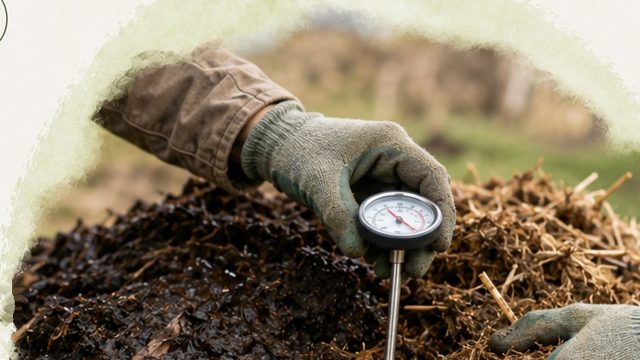
A compost pile stays cool when the microorganisms inside it are not working fast enough, or when the heat they make escapes as quickly as it appears. Heat is a result of microbial activity, not an ingredient you can add. The same cool pile can have several different causes, so the temperature alone cannot tell you which one you are dealing with.
Where compost heat comes from
Compost heat is a by-product of life. Microorganisms break down organic matter in the presence of oxygen. This is called aerobic decomposition. Like a running engine, this process releases heat.
So a warm pile means microbes are active, and a cool pile means something is slowing them down or the heat is not being kept. To work well, microbes need suitable water and air conditions and material they can actually use.
Three broad areas that can limit the process
Water and air conditions
Microbes need both. A pile that is too wet or too compacted can restrict oxygen. A pile that is very dry limits biological activity. These are opposite problems, but both can leave a pile cool.
Material properties and balance
What the pile is made of matters, and so does its physical structure. Both influence how well decomposition gets going.
The pile’s ability to retain heat
Microbes may be producing heat, but size and shape influence how much of it stays inside. A pile can generate heat and still not feel warm.
Each of these can produce a similar symptom: a pile that does not warm up. From the outside, they can look the same.
Why temperature does not tell you what to do
Temperature is a process signal. It shows that something is happening or not happening. It does not show why.
A cool reading can fit several very different causes. The number is the same, but the causes are different, and so is what each one needs.
Reading a thermometer is the easy part. Working out what the reading means for your pile takes a proper diagnosis.
Why random fixes can backfire
When a pile is cool, the temptation is to start changing things. But a change that helps one pile can harm another. If you treat the wrong cause, the pile may stay cool or get worse.
Guessing also makes the pile harder to read. After several changes at once, you no longer know which problem you were solving or which change caused what.
Get the full method
The BioFarmLab course teaches the complete way to find out what is holding your pile back and what to do about it. See Living Soil Shortcut.