How can soil fertility be restored? Compost and the return of life
How compost helps restore depleted soil, improve its structure and retain water. Regeneration, changes in the soil profile and land quality.

Depleted soil can regain fertility as biological life returns, structure improves and organic matter builds up. Biologically rich compost helps set this transformation in motion. Living roots, ground cover and less digging help sustain it. The result is soil that absorbs water more readily, gives roots room and plays a more active part in feeding plants.
On our farm and in many other places, soil regeneration surprises us with both its speed and its scale. Ground that resembles a semi-desert begins to support lush vegetation. Where life has returned, plants come back in successive seasons. Their roots, cover and remains help improve soil conditions further.
We see this particularly clearly in our fields: in regenerated areas, plants grow without us planting, fertilising or tending them. Species appear that we never expected to find there. The remarkable thing is that the effect lasts: life sustains and develops the transformation we helped begin.
Compost grows the life that soil needs
Compost is often called “soil for vegetables”. Its appearance encourages that idea: finished material is dark and crumbly and smells like woodland. Yet its role in regeneration goes far beyond filling a raised bed.
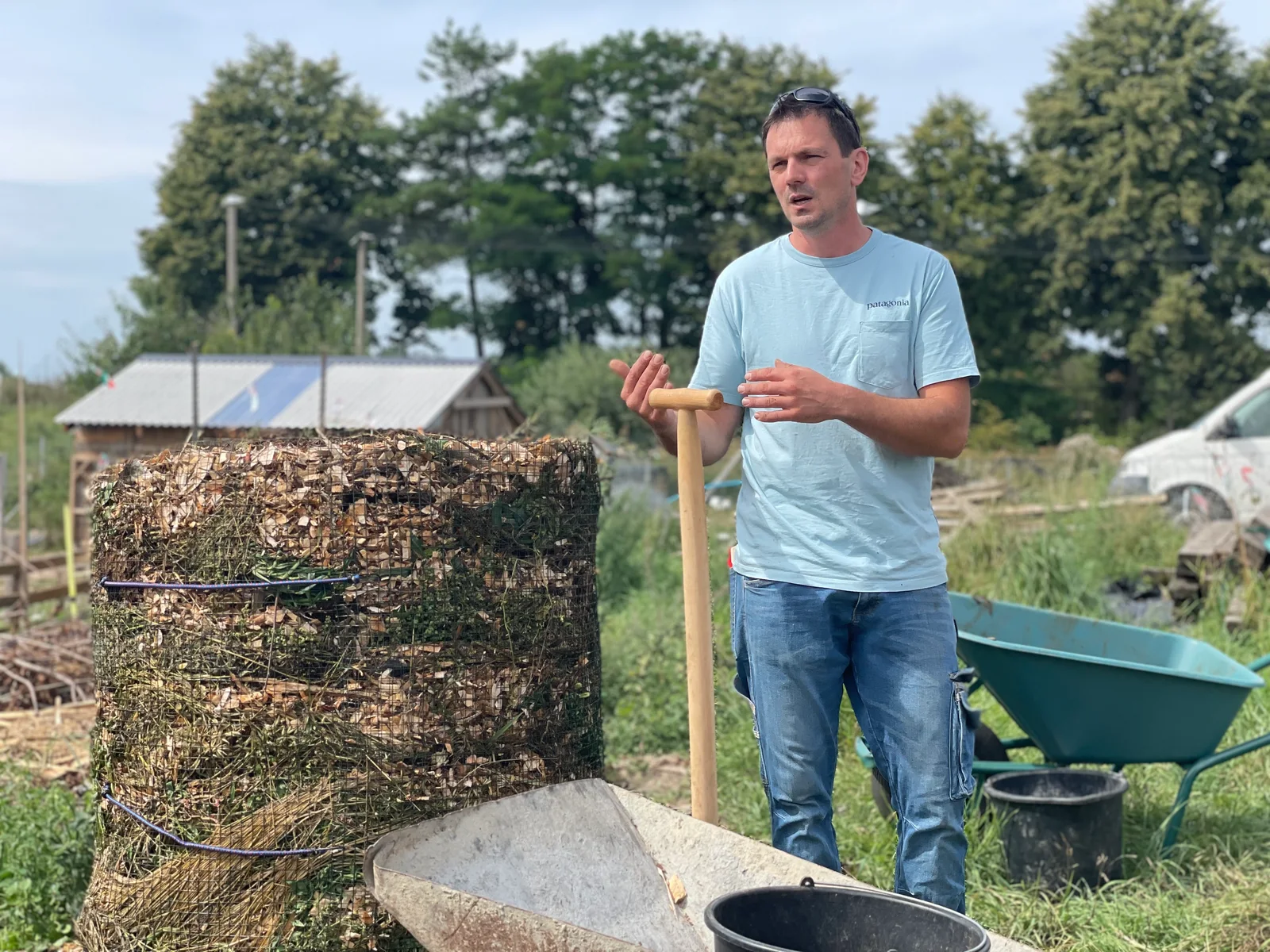
Well-managed compost supports organisms that can later help rebuild soil. The pile becomes a place where they multiply; finished compost carries them to where they are needed.
That is why two similar-looking batches can have different value. Colour does not reveal how many fungi, bacteria or organisms that feed on them are present. We examine these through biological compost testing.
Making good compost also means cultivating life that will keep working beyond the pile.
How compost helps change soil structure
Bacteria produce sticky substances that help bind soil particles together. Fungal threads wrap around them and link them into larger aggregates. Roots contribute to this structure and, when they die, leave channels for water, air and new roots.
This creates a structure that lets soil take in water while retaining space for air. Roots have room to grow, and organisms have conditions in which to keep working.
Good soil structure is also a product of life. Soil’s capacity to build it can be restored. Compost supplies organic matter and, depending on its biological quality, organisms that support this process. We combine its use with protecting the structure as it develops.
From sparse vegetation to a place that sustains life
As soil conditions improve, plants can grow more roots and make better use of water. Their growth begins to change the whole place.
Leaves cover the surface. Roots feed microorganisms with compounds produced through photosynthesis. Dead plant parts become more food. Growing vegetation thus helps create conditions for the next generation of plants.
Each successful season can leave the soil better equipped for the next.
We observe exactly these changes on our farm. Vegetation returns year after year in regenerated parts of our fields, including places we no longer tend. This shows us how much of the work a recovering ecosystem can gradually take on.
Growing vegetables and running a farm still require work. What changes is the starting point: plants grow in an environment that increasingly supports them.
How quickly can depleted soil recover?
Degraded ground can regain the ability to support lush growth far faster than its appearance suggests. The most striking examples move from bare, drying ground to vegetation that covers the soil, develops roots and adds more organic matter each season.
Behind this transformation is a process that works in gardens, pastures and fields: life improves conditions for more life. Recovering structure makes it easier for water to enter and roots to grow. Stronger plants provide more food for soil organisms. The process begins to reinforce itself.
At its most successful, regeneration turns an initial improvement into a much larger transformation. Vegetation increases, the surface stays moist longer and the soil supports growth more effectively. Plants return that previously lacked suitable conditions. A place poor in life becomes increasingly diverse and productive.
The greatest potential lies in the durability of this recovery. As plants and organisms take on more of the work, the need to keep rescuing the soil diminishes. Successive seasons can build on what has been achieved, rather than requiring everything to start again.
Can the soil profile change?
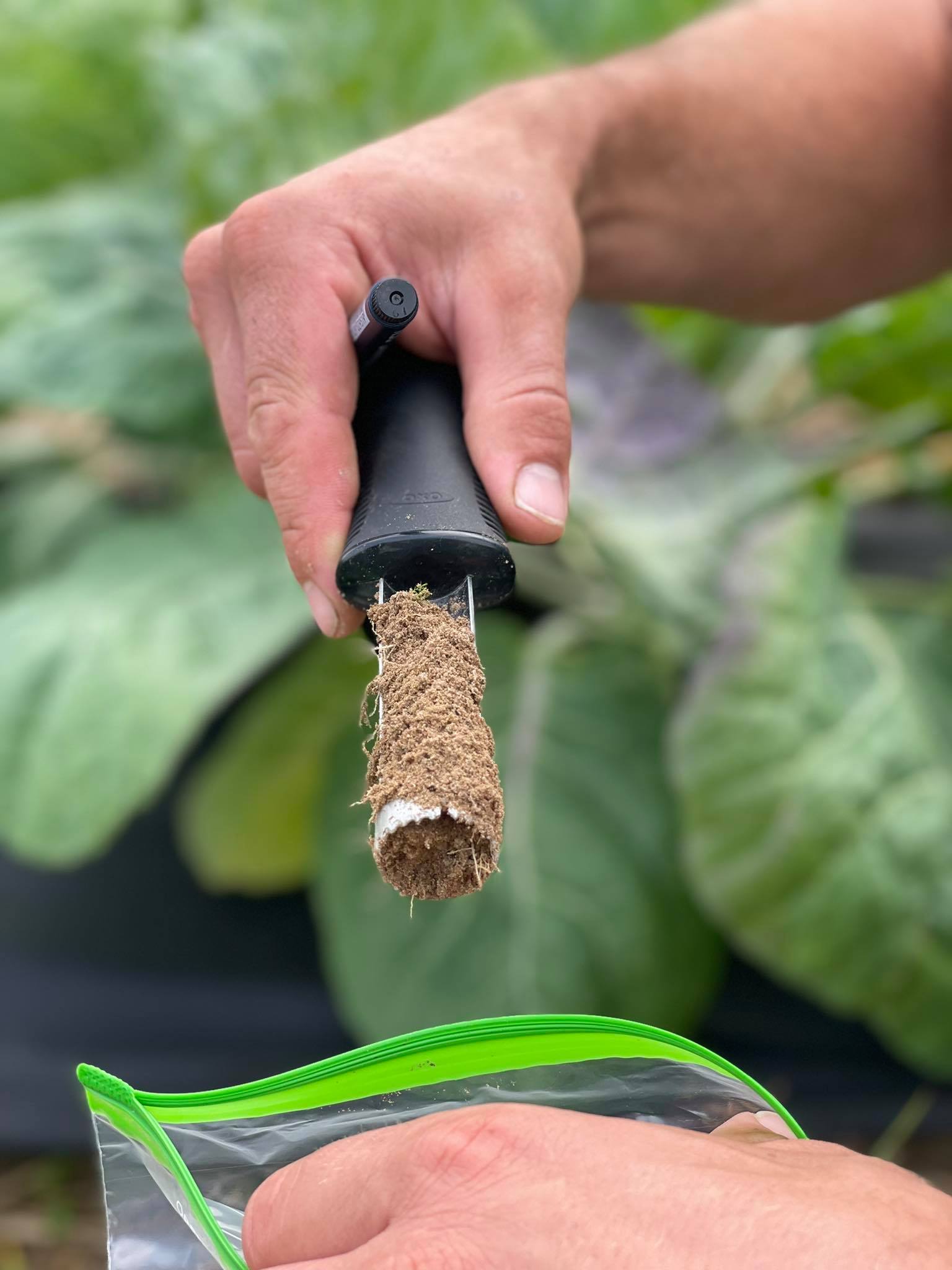
Properties visible in a soil profile can change: structure, organic matter content, compaction and conditions for root development. A profile is a cross-section through the soil’s successive layers. It shows how soil looks and functions below the surface too.
In regeneration, we look at whether roots reach deeper, lasting pore spaces develop and water and air conditions improve. Changes need not occur evenly throughout the depth.
Texture—the proportions of sand, silt and clay—is much less changeable. Adding compost will not turn sand into clay. It can, however, improve how sandy soil functions, including by increasing organic matter and supporting soil biology.
Regeneration develops the potential of the soil already there. It does not require it to become a completely different soil type.
Can soil quality improve?
In everyday conversation, “better-quality land” often simply means more fertile soil in which plants grow better. Regeneration can improve quality in that sense.
An official land-quality class is a separate assessment. In Poland, improvements in structure, biology or plant growth do not automatically change the class recorded in the land register. Establishing or changing it requires formal classification.
For a gardener or farmer, practical improvement may be evident sooner: soil manages water better, gives roots better conditions and supports richer life. These changes are worth pursuing regardless of the classification in the paperwork.
What makes regeneration last?
Lasting improvement comes from sustaining the processes that have recovered. Living roots feed organisms. Ground cover protects against drying and sharp temperature changes. Less digging helps preserve fungal threads and developing aggregates.
Compost is part of this system. Repeated applications cannot replace the conditions that allow life to persist.
In our fields, continuity gives the most convincing result: vegetation develops in successive seasons without us having to restart the recovery. Protected soil retains more of what organisms and plants have built.
From your own soil to a regeneration plan
At BioFarmLab, we combine experience on our farm with examining life under the microscope. We observe both whole landscapes changing and the organisms involved.
Our Polish course, Żywa Gleba Krok po Kroku, connects assessing soil, making valuable compost and choosing how to use it. For English-language learning, explore Living Soil Shortcut. The BioFarmLab laboratory helps assess the biological part of this work; its information page is in Polish. We also explain on-site assessment in our article on soil conditions and poor plant growth.
Degraded-looking soil shows its present condition. It does not define everything that place can become.